


Time and Attendance Management Software is a specialized tool designed to monitor and manage employees’ work hours. It automates the process of recording time worked, tracking attendance, managing leave, and generating reports. This software is crucial for ensuring compliance with labor laws, reducing payroll errors, and optimizing workforce management.
Table of Contents
- Importance of Time and Attendance Management in Business
- Fingertec Facial Recognition Time Clock
- Understanding Time and Attendance
- Key Features of Time and Attendance Software
- Benefits of Using Time and Attendance Software
- Types of Time and Attendance Systems
- How to Choose the Right Time and Attendance Software
- Implementation Tips
- Common Challenges and How to Overcome Them
- Expert Insights and Industry Trends
- FAQs
- Conclusion
Importance of Time and Attendance Management in Business
Efficient time and attendance management software is essential for any business, regardless of size. It ensures that employees are paid accurately and on time, which boosts morale and productivity. Moreover, it helps businesses comply with labor regulations, avoiding costly fines and penalties.
Fingertec Facial Recognition Time Clock
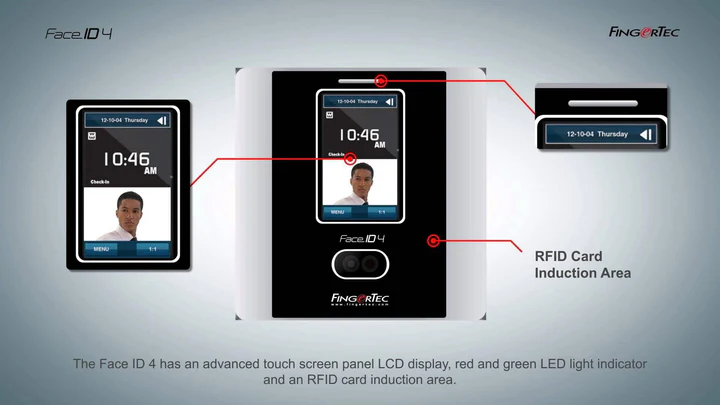
The Fingertec Facial Recognition Time Clock is an advanced time and attendance solution designed to streamline workforce management with cutting-edge biometric technology. Featuring high-precision facial recognition, this time clock ensures accurate and reliable employee identification, reducing the risk of buddy punching and time theft. Employs state-of-the-art facial recognition technology for fast and accurate employee verification. Processes and verifies facial data swiftly, minimizing wait times and enhancing operational efficiency. Equipped with a clear and intuitive touchscreen interface for easy navigation and quick setup.
CS Time Clock Proximity Model
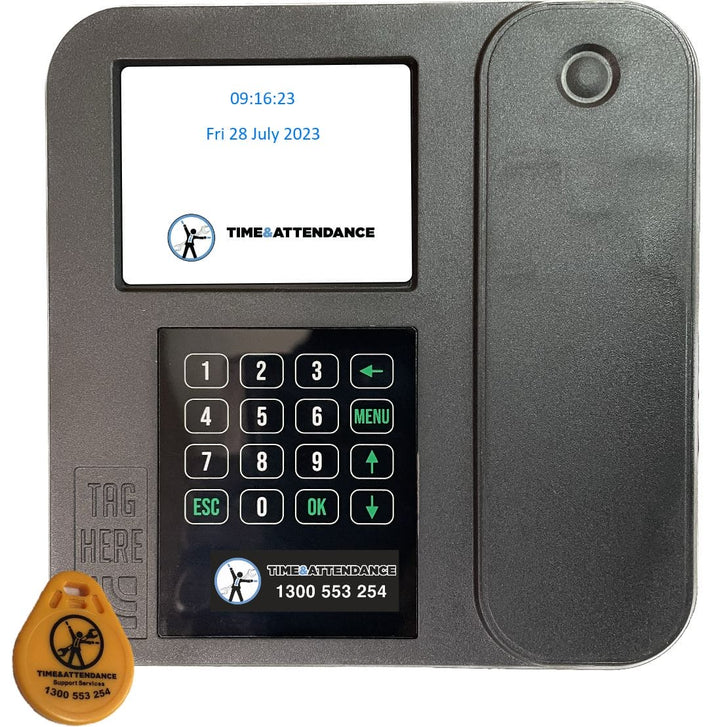
The CS Time Clock Proximity Model offers a reliable and efficient solution for managing employee attendance with cutting-edge proximity card technology. Designed to simplify time tracking and improve accuracy, this time clock is ideal for businesses looking to streamline their attendance processes. Utilizes advanced proximity card reading technology to quickly and accurately record employee clock-ins and clock-outs without physical contact. Ensures accurate recording of employee hours, reducing errors and administrative time spent on manual tracking. Features an intuitive interface that is easy to navigate, making it simple for employees to use and for administrators to manage.
Understanding Time and Attendance
History and Evolution of Time Tracking
Time tracking has evolved from manual punch cards to sophisticated software systems. Early timekeeping relied on mechanical clocks and paper records, which were prone to errors and manipulation. Today, advanced software solutions have replaced these outdated methods, offering precision, security, and efficiency.
Traditional vs. Modern Time Tracking Methods
Traditional methods, such as punch cards and paper timesheets, are now largely obsolete due to their inefficiency and susceptibility to errors. Modern time tracking methods include biometric scanners, RFID cards, and mobile apps, providing accurate and tamper-proof records.
Key Features of Time and Attendance Software
Automated Time Tracking
Automated time tracking eliminates the need for manual input, reducing errors and saving time. Employees can clock in and out using various methods, such as biometric scans or mobile apps, ensuring accurate data collection.
Absence and Leave Management
This feature allows HR to easily manage employee leave requests, track absences, and ensure compliance with company policies. It also helps in forecasting workforce needs based on historical data.
Integration with Payroll Systems
Integrating time and attendance software with payroll systems automates the payroll process, ensuring employees are paid accurately and on time. This reduces the risk of errors and helps maintain compliance with labor laws.
Real-Time Analytics and Reporting
Real-time analytics provide insights into workforce productivity, attendance patterns, and overtime trends. This data is invaluable for making informed business decisions and optimizing resource allocation.
Benefits of Using Time and Attendance Software
Improved Productivity
By automating time tracking and attendance management, businesses can free up valuable time for HR teams, allowing them to focus on more strategic tasks. Accurate time tracking also discourages time theft and ensures employees are working their scheduled hours.
Enhanced Accuracy and Compliance
Automated attendance systems reduce the risk of human error in time tracking and payroll processing. They also help businesses comply with labor regulations by maintaining accurate records and generating reports for audits.
Cost Savings
Time and attendance software can lead to significant cost savings by reducing payroll errors, minimizing overtime costs, and improving overall workforce efficiency.
Better Workforce Management
With real-time data on attendance and productivity, managers can make informed decisions about scheduling, resource allocation, and employee performance.
Types of Time and Attendance Systems
Biometric Time Clocks
Biometric time clocks use fingerprint or facial recognition technology to verify an employee’s identity, ensuring accurate time tracking and eliminating buddy punching.
RFID and Proximity Cards
RFID and proximity cards allow employees to clock in and out by simply swiping a card, making the process quick and convenient.
Mobile and Cloud-Based Solutions
Mobile apps and cloud-based solutions offer flexibility, allowing employees to clock in from remote locations. This is particularly useful for businesses with a distributed workforce or those operating in the gig economy.
On-Premises vs. Cloud-Based Solutions
On-premises solutions require physical servers and maintenance, while cloud-based solutions are hosted remotely, offering greater flexibility, scalability, and reduced IT costs.
How to Choose the Right Time and Attendance Software
Assessing Your Business Needs
Before choosing a time and attendance system, it’s crucial to assess your business’s specific needs, such as the number of employees, the complexity of schedules, and the level of integration required with other systems.
Evaluating Software Providers
Consider factors such as the provider’s reputation, customer reviews, and the level of support offered. It’s also important to evaluate the software’s ease of use and compatibility with your existing systems.
Considering Scalability and Flexibility
Choose a solution that can scale with your business as it grows. Flexibility is also important, as your needs may change over time, requiring software that can adapt.
Importance of Customer Support and Training
Good customer support and training are essential for a smooth implementation. Ensure the provider offers comprehensive training for your team and ongoing support to address any issues that arise.
Implementation Tips
Planning and Preparation
Successful implementation begins with thorough planning. This includes defining your goals, selecting a project team, and creating a detailed timeline for the rollout.
Employee Training and Engagement
Proper training is key to ensuring employees understand how to use the new system. Engage employees early in the process to address any concerns and encourage adoption.
Integration with Existing Systems
Ensure that the new software integrates seamlessly with your existing systems, such as payroll and HR management software, to avoid disruptions.
Monitoring and Optimizing Usage
After implementation, continuously monitor the system’s performance and make adjustments as needed to optimize its use and achieve your desired outcomes.
Common Challenges and How to Overcome Them
Resistance to Change
Employees may resist adopting a new system due to fear of the unknown or concerns about privacy. Address these concerns through clear communication and training.
Technical Issues and Downtime
Technical issues can arise during implementation or operation. Mitigate these risks by working closely with your software provider and having a contingency plan in place.
Ensuring Data Security and Privacy
Data security is a critical concern when implementing time and attendance software. Choose a solution that complies with industry standards and implements robust security measures to protect employee data.
Expert Insights and Industry Trends
Quotes from Industry Experts
Time and attendance software is rapidly evolving, with AI and machine learning playing a significant role in enhancing its capabilities, says John Doe, a leading HR technology expert.
Current Trends in Time and Attendance Management
Recent trends include the integration of AI for predictive analytics, increased use of mobile apps, and the rise of cloud-based solutions that offer greater flexibility and scalability.
FAQs
What is the best time and attendance software?
The best time and attendance software depends on your business’s specific needs. Factors to consider include the size of your workforce, integration requirements, and desired features. Some popular options include biometric systems, cloud-based solutions, and mobile apps.
How does time and attendance software improve productivity?
Time and attendance software improves productivity by automating time tracking, reducing administrative tasks, and providing real-time data on employee performance. This allows for better scheduling, efficient resource allocation, and timely identification of productivity issues.
Can time and attendance software integrate with payroll systems?
Yes, many time and attendance software solutions offer integration with payroll systems. This integration automates the payroll process, ensuring accurate calculations and timely payments, while also reducing the risk of errors and compliance issues.
Conclusion
Time and attendance management software is an essential tool for businesses seeking to streamline their workforce management processes. It offers numerous benefits, including improved accuracy, cost savings, and enhanced productivity. By understanding the various types of systems available and selecting the right solution for your needs, you can significantly improve your time tracking and attendance management.